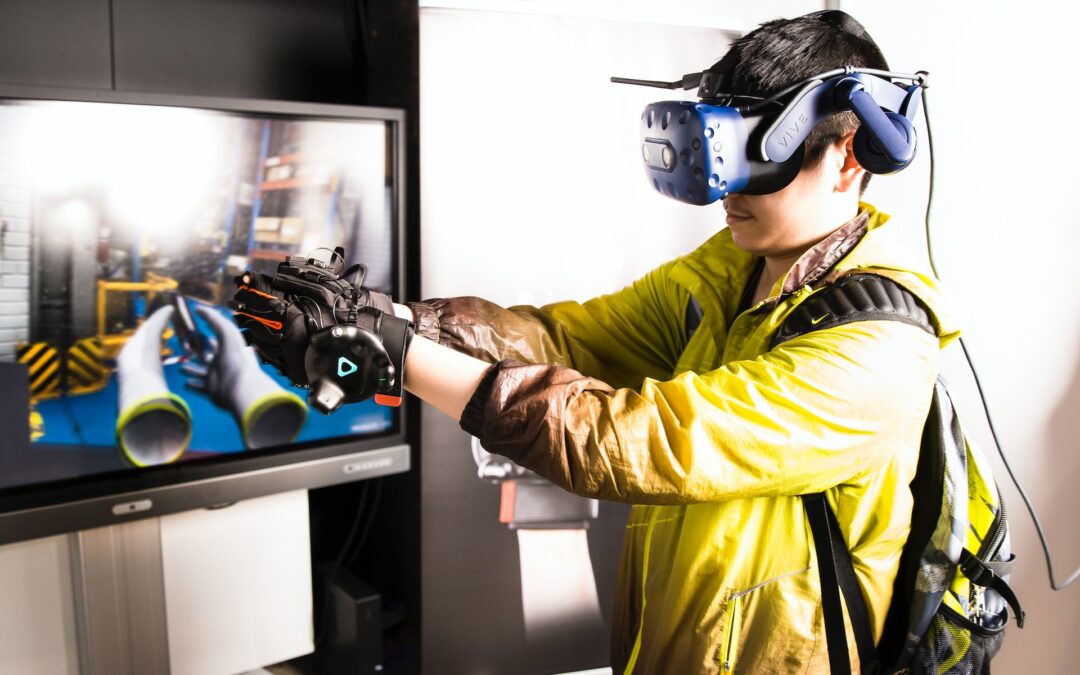
In today’s digital age, the way we interact with technology is constantly evolving. One of the most exciting developments on the horizon is Extended Reality (XR), a groundbreaking technology that promises to revolutionize the user experience (UX) across a wide range of industries. In this blog post, we will explore how XR is changing the game when it comes to user experience and why it matters more than ever.
What is Extended Reality (XR)?
Extended Reality, or XR, is an umbrella term that encompasses virtual reality (VR), augmented reality (AR), and mixed reality (MR). These immersive technologies combine the real and virtual worlds, creating a seamless and interactive experience for users. XR has gained significant traction in recent years, with applications spanning from entertainment and gaming to healthcare, education, and industrial sectors.
Enhancing Immersion
One of the primary ways XR improves user experience is by enhancing immersion. When users put on a VR headset or view AR content through their devices, they are transported to a different world or presented with digital information overlaid onto their real environment. This immersion creates a sense of presence and engagement that was previously unattainable with traditional interfaces.
For example, in gaming, XR can transport players to fantastical realms where they can interact with characters and environments in ways that were once the stuff of science fiction. In education, XR can take students on virtual field trips to explore historical sites or dive into the depths of the ocean to learn about marine life. The level of immersion offered by XR not only makes experiences more enjoyable but also facilitates deeper learning and understanding.
Enhancing Interactivity
XR also takes interactivity to a whole new level. With XR, users can interact with digital elements in a more natural and intuitive manner. In VR, you can use hand controllers to grab objects, draw in 3D space, or even engage in physical activities like boxing or dancing. In AR, you can manipulate digital objects as if they were real, such as rearranging furniture in your living room before making a purchase decision.
This heightened interactivity not only makes experiences more engaging but also more functional. In healthcare, surgeons can use XR to practice complex procedures before performing them on real patients, reducing the risk of errors. In manufacturing, workers can use XR to receive real-time guidance and information while performing tasks, improving efficiency and safety.
Breaking Down Barriers
XR has the potential to break down barriers in various fields. For individuals with disabilities, XR can provide new avenues for communication and interaction. For example, AR glasses can offer real-time captioning or sign language interpretation, making social interactions and information access more inclusive. In entertainment, XR can enable people with limited mobility to explore virtual worlds and engage in activities that might be otherwise impossible.
Challenges and Considerations
While XR holds incredible promise for enhancing user experiences, there are challenges to overcome. These include technical issues like device affordability, comfort, and content quality, as well as ethical concerns related to privacy and data security. It’s essential to address these challenges to ensure that XR benefits everyone and doesn’t create new divides.
In conclusion, Extended Reality is poised to revolutionize user experience across various domains. Its ability to enhance immersion, interactivity, and inclusivity opens up new possibilities and opportunities. As XR technology continues to advance, we can look forward to a future where the line between the physical and digital worlds becomes increasingly blurred, creating experiences that are more engaging, educational, and inclusive than ever before. Whether you’re a developer, a business owner, or simply an enthusiast, now is the time to explore the exciting world of XR and its potential to transform the way we experience technology.